Should men's supplements focus on zinc, magnesium, or astaxanthin? After age 35, slower workout recovery, tight shoulders and neck, and afternoon fatigue often relate to whether the daily nutritional baseline is adequately supported. Choosing the right direction matters more than taking more. This article explains the respective roles of zinc, magnesium, and astaxanthin for men and how BLNC uses your genes to select the 6 formulas you receive each month from a fixed pool of 11 instead of giving you all of them.
Many articles about men's supplements open by proclaiming energy and stamina like an advertisement. Consider a different angle. You probably arrived here because your workout recovery has slowed, your shoulders and neck always feel tight, or your energy crashes in the afternoon. These are not major problems; they can be signals of whether your daily nutritional baseline is adequate. Here, baseline means the vitamins and minerals you need every day and may notice when you lack.
The problem is the sheer number of choices on the shelf. Is zinc, magnesium, or astaxanthin right for you? You should not have to guess. BLNC does not sell a single product labeled for men. Instead, it uses a two-layer genetic interpretation to select 6 suitable formulas from a fixed pool of 11. Begin with your constitution and then decide which formulas to take; reversing that order can waste money.
▸ Why is age 35 considered a turning point?
Age 35 is not a magical number. It is an approximate period when several measurable changes begin to appear in many adult men. Muscle mass, for example, gradually declines each year after midlife, a pattern observed in both longitudinal and cross-sectional studies. A whole-body MRI analysis of skeletal muscle mass also found a clear association between age and lower muscle mass. Basal metabolism and everyday activity also influence each other. These are associated trends described in population research and vary among individuals. The point is not to panic, but to maintain a stable daily nutritional baseline so your body has the resources to respond to these changes.

Zinc in the UC-II Formula
Zinc may be the best-known ingredient in men's supplements, but an often-overlooked characteristic is that the people most likely to notice supplementation are those who were low in zinc to begin with. If your refrigerator is already full, buying more only takes up space.
The key question for zinc, then, is not simply whether men should take it, but whether you are low in it. At BLNC, zinc appears in the UC-II Collagen formula during the enhanced second 15 days. Genetic interpretation determines whether it enters your enhanced list. This is the first practical result of the central principle: formula selection follows constitution, not sex.
▸ What does zinc actually do in the body? A look at the scientific details
Zinc is a trace element, meaning the body needs only a small amount but problems can occur when too little is present. The UC-II formula uses patented zinc glycinate and provides 15mg per capsule, reaching 100% of the Daily Reference Value. This amount supports discussion of zinc's physiological functions. Zinc is a component of insulin and many enzymes, contributes to the maintenance of normal taste and appetite, and helps maintain normal energy, carbohydrate, protein, and nucleic acid metabolism. These are the roles zinc normally performs in the body. A meta-analysis also found that improvements in taste-related concerns with zinc supplementation were more common among people whose zinc status was low at baseline (Mozaffar et al., 2023), consistent with the point that people who are low are more likely to notice supplementation.
There is another formulation consideration: in addition to zinc, this UC-II Collagen formula contains small amounts of marine calcium and marine magnesium. When high doses of minerals are taken together, they may affect one another's absorption or utilization and reduce bioavailability, the proportion actually absorbed and used. BLNC therefore balances the proportions and avoids extreme doses rather than asking you to swallow handfuls of standalone high-dose products.
If you exercise regularly and often eat away from home, it can be easy to consume too little magnesium. Magnesium deserves particular attention because it contributes to the normal function of the heart, muscles, and nerves and forms a worthwhile everyday foundation for active people. Think of magnesium as the switches in your home: turning things on and off at the right time helps many small actions in the body run smoothly. Modern diets high in restaurant food and refined carbohydrates, however, often provide too little magnesium.
That is why BLNC places Marine Magnesium + 72 Marine Minerals in the foundational first 15 days. It is not a special requirement for only a few people; it is a nutrient many people obtain too little of in their everyday diets. Whether this formula enters your first 15 days still depends on genetic interpretation, not whether you exercise.
▸ Is everyone really deficient in magnesium? What does research say?
Dietary intake surveys in multiple countries have observed that a considerable proportion of adults consume less magnesium than recommended (de Baaij et al., 2015). People who frequently eat away from home and consume more refined carbohydrates are particularly likely to fall short, although proportions vary by location and actual intake depends on the individual.
The Marine Magnesium formula provides 200mg of magnesium per capsule, reaching 51% of the Daily Reference Value. This amount supports discussion of magnesium's physiological functions. Magnesium contributes to the normal function of the heart, muscles, and nerves and helps maintain normal carbohydrate metabolism. Research findings on the frequently discussed use of magnesium for sleep and relaxation are not yet consistent. The clearer direction is that people with low magnesium at baseline are more likely to notice a difference when they establish a stable daily intake.
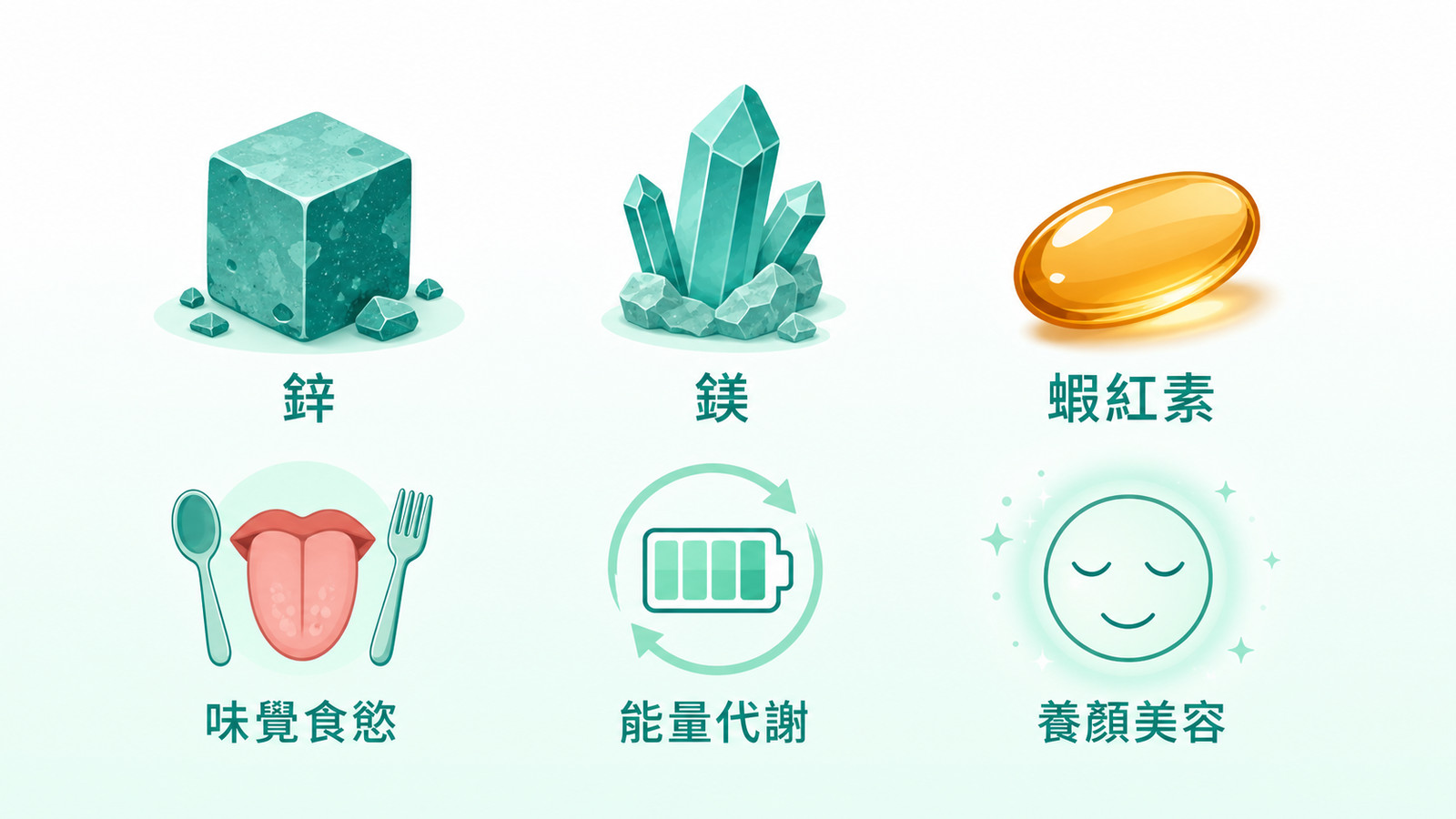
Everyday Roles of Zinc, Magnesium, and Astaxanthin
Astaxanthin has received a great deal of attention in recent years. It is a reddish carotenoid derived from algae. At BLNC, it belongs to the enhanced category for the second 15 days and is often paired with turmeric.
Astaxanthin is positioned for everyday care related to appearance and a healthy-looking complexion, making it more suitable for men who want additional support in these areas. It prefers to travel with fat, so take it with a meal, particularly one containing some fat, for better absorption than on an empty stomach. To learn more about the ingredient, see this plain-language guide to the benefits of astaxanthin.
▸ Astaxanthin's ingredient properties and level of evidence
Astaxanthin is a fat-soluble carotenoid with antioxidant properties. Related human supplementation research largely consists of small trials that observe changes in markers such as oxidative stress and inflammation. The evidence remains preliminary and warrants continued attention (Ma et al., 2022). Because it is fat-soluble, absorption with a meal containing fat is notably better than on an empty stomach, which is why it is often designed to be taken with food. In products, astaxanthin is positioned for everyday beauty and healthy-complexion care.
The BLNC design becomes easy to understand when you place these three ingredients back into it. You receive 6 formulas each month, not all 11: probiotics are standard, and the two-layer genetic interpretation selects the other 5.
A common arrangement for men uses the foundational first 15 days to establish daily nutrition with probiotics, vitamins, and minerals. The enhanced second 15 days then moves in the direction you need to support, potentially including UC-II Collagen with zinc or Turmeric + Astaxanthin. Depending on need, the lipid slot contains algal DHA or standalone astaxanthin. It is like selecting the dishes to cook this month rather than bringing the entire market home.
▶ Preview a genetic nutrition report to see how BLNC organizes your nutritional gaps into monthly formulas.
▸ Do not confuse 11 formulas, 6 formulas, and two stages
Put simply, the menu has 11 formulas and 6 are served each month. The 11 make up a fixed product pool—5 foundational candidates for the first 15 days and 6 enhanced candidates for the second 15 days. They are the menu, not the number you take each month. The 6 are the formulas you actually receive: 1 standard probiotic plus 5 selected by your genes. 3 are taken during the first 15 days (the probiotic, 1 vitamin, and 1 mineral), and 3 during the second 15 days (2 enhanced wellness formulas and 1 lipid formula). The lipid slot contains either algal DHA or standalone astaxanthin. Algal oil is an Omega-3, while astaxanthin is a carotenoid; they serve different roles and are not the same category. Turmeric + Astaxanthin occupies an enhanced wellness slot and is not the same option as standalone astaxanthin.
Behind this interpretation, BLNC is developed by Insight Genomics Inc., a genetic-testing company built on technology transferred from National Cheng Kung University. Its R&D team has focused on genetic nutrition interpretation for years, and its own laboratory personally oversees every step from specimen handling to analysis, helping make your supplementation choices clearer and more reassuring.
For Omega-3, BLNC uses only algal oil and does not separately provide fish oil. The DHA found in fish originally comes from algae. Algal oil is taken directly from that original source and is a non-fish, algae-derived option, making it reasonable for vegetarians or people who prefer not to use animal-derived products. Anyone with a history of allergies should still evaluate it in light of their circumstances.
The exact 5 formulas can change; the total does not.
You may wonder why you and a friend, both 35-year-old men, receive different formulas. It is because BLNC considers genes, not sex.
The first layer examines which types of nutrition you may need more, and the second incorporates broader genetic tendencies into an integrated interpretation, adding nutritional and metabolic tendencies that questionnaires cannot reveal. The result is your 6 formulas. The goal is not to give every man the same bottle, but to align what you take with your body. If you also care about nutrition for prolonged sitting and intensive mental work, see how to choose nutrition for sedentary office workers.
▸ Why divide establishing the foundation and adding support into two stages?
In BLNC's two-layer interpretation, the first layer covers 22 nutrients visible in the report, including nutrition-related areas such as vitamin absorption and mineral metabolism. The second incorporates broader genetic tendencies into an integrated interpretation, adding inborn tendencies that questionnaires have difficulty capturing but that may affect nutrient metabolism. This is an application of nutrigenomics: different genotypes may affect nutrient metabolism, needs, or responses, so formula recommendations focus on which types of nutritional support deserve priority.
The two stages translate recommendations into a manageable daily rhythm. The foundational category establishes a stable nutritional baseline in the first 15 days, and the enhanced category then follows genetic tendencies during the second 15 days. Taking only a few formulas each day in two stages also supports consistent long-term use. Consistency over time is often more important than taking a large amount once.
BLNC's Precision Nutrition Approach
At this point, you may be wondering: At my age, should I take zinc, magnesium, or astaxanthin?
You should not have to guess. A better approach is to use your genetic nutritional tendencies as an initial reference.
BLNC has 11 selected formulas and gives you 6 each month. The foundational category establishes a baseline during the first 15 days, and the enhanced category goes deeper during the second 15 days. These recommendations come from a two-layer integrated interpretation of 22 nutrients and broader genetic tendencies. The intersecting information can be obtained only through testing, not questionnaires. The complete approach is explained in this guide to genetic precision nutrition.
If your genetic nutritional tendencies indicate that mineral metabolism deserves priority, Marine Magnesium will be placed in your foundational first 15 days. If astaxanthin fits your daily wellness needs, Turmeric + Astaxanthin may enter the enhanced second 15 days.
Everyone receives probiotics. The other 5 formulas are selected through your two-layer genetic interpretation. Do not miss what you need or buy what you do not.
Men often tell themselves they can simply push through, but setting the right direction early requires less effort. Instead of switching brands and starting the guessing process again every year, spend a few dozen seconds collecting a sample so your money goes toward the formulas you can actually use.
▶ Schedule a cheek swab: It takes a few dozen seconds with no blood draw and can be completed at home, giving you a report on your nutritional and metabolic tendencies. ▶ Start your personalized monthly formulas: Let your genes select your 6 formulas from 11 options for a consistent monthly cycle, so you do not miss what you need or buy what you do not.
A genetic report is a reference that helps you understand your body; it is not a medical diagnosis. These formulas provide daily nutritional support, not medication, and cannot prevent, improve, or treat disease. If you have a health condition, follow your physician's guidance first and then establish a stable daily wellness routine.
Is genetic testing necessary to choose men's supplements?
You can supplement without testing, but you may take nutrients you are not low in. In research, the benefits of zinc and magnesium supplementation are often concentrated among people whose intake was already insufficient. Genetics can help you understand nutritional and metabolic tendencies and prioritize directions more worth supporting. Spending on the right ingredients is more practical than switching brands based on guesswork.
Can zinc and magnesium be taken together?
Yes. BLNC balances mineral proportions in each formula and avoids extreme doses instead of asking you to take several high-dose standalone products at once. Marine Magnesium appears in the foundational first 15 days and zinc-containing UC-II in the enhanced second 15 days because of the rhythm of establishing a foundation before going deeper, not because zinc and magnesium must be separated.
When should I take astaxanthin?
Take it with a meal, particularly one containing some fat. Astaxanthin is fat-soluble and is absorbed much better with fat than on an empty stomach, which is why it is often designed to be taken with food.
Can vegetarian men supplement Omega-3?
Yes. BLNC's Omega-3 uses algal oil, a non-fish, algae-derived source and the original source of DHA. It still provides DHA and is a reasonable choice for vegetarians or people who prefer not to use animal-derived products.
References
- Mozaffar B, et al. The Effectiveness of Zinc Supplementation in Taste Disorder Treatment: A Systematic Review and Meta-Analysis of Randomized Controlled Trials. J Nutr Metab. 2023. PMID:36937245
- de Baaij JH, Hoenderop JG, Bindels RJ. Magnesium in man: implications for health and disease. Physiological Reviews. 2015. PMID:25540137
- Ma B, Lu J, Kang T, Zhu M, Xiong K, Wang J. Astaxanthin supplementation mildly reduced oxidative stress and inflammation biomarkers: a systematic review and meta-analysis of randomized controlled trials. Nutrition Research. 2022. PMID:35091276


