Many older adults have a row of bottles in the drawer and still feel unsure after years of calcium tablets. The issue is often not how much goes in, but how much is absorbed. As we age, the gut becomes gradually less efficient at handling minerals. Appetite shrinks, so the daily intake is already smaller. Put those two together and the same tablet leaves a different amount behind at different ages. So the first question for daily nutrition in later life is not "what am I still missing" but "can my body use what I am taking". That is why some people notice a difference simply from getting the combinations right.
▸ Why does absorption decline with age? The physiology behind it
With age, the gut naturally becomes less efficient at absorbing minerals. At the same time, less time outdoors means the skin synthesises less vitamin D from sunlight. The two are linked: vitamin D is involved in calcium absorption, so when it drops first, the gap on the calcium side is amplified. Add the generally smaller portions and lower daily intake of protein and minerals common in later life, and "many bottles, limited use" becomes a familiar situation. Sorting out the combinations is usually more efficient than buying two more bottles.
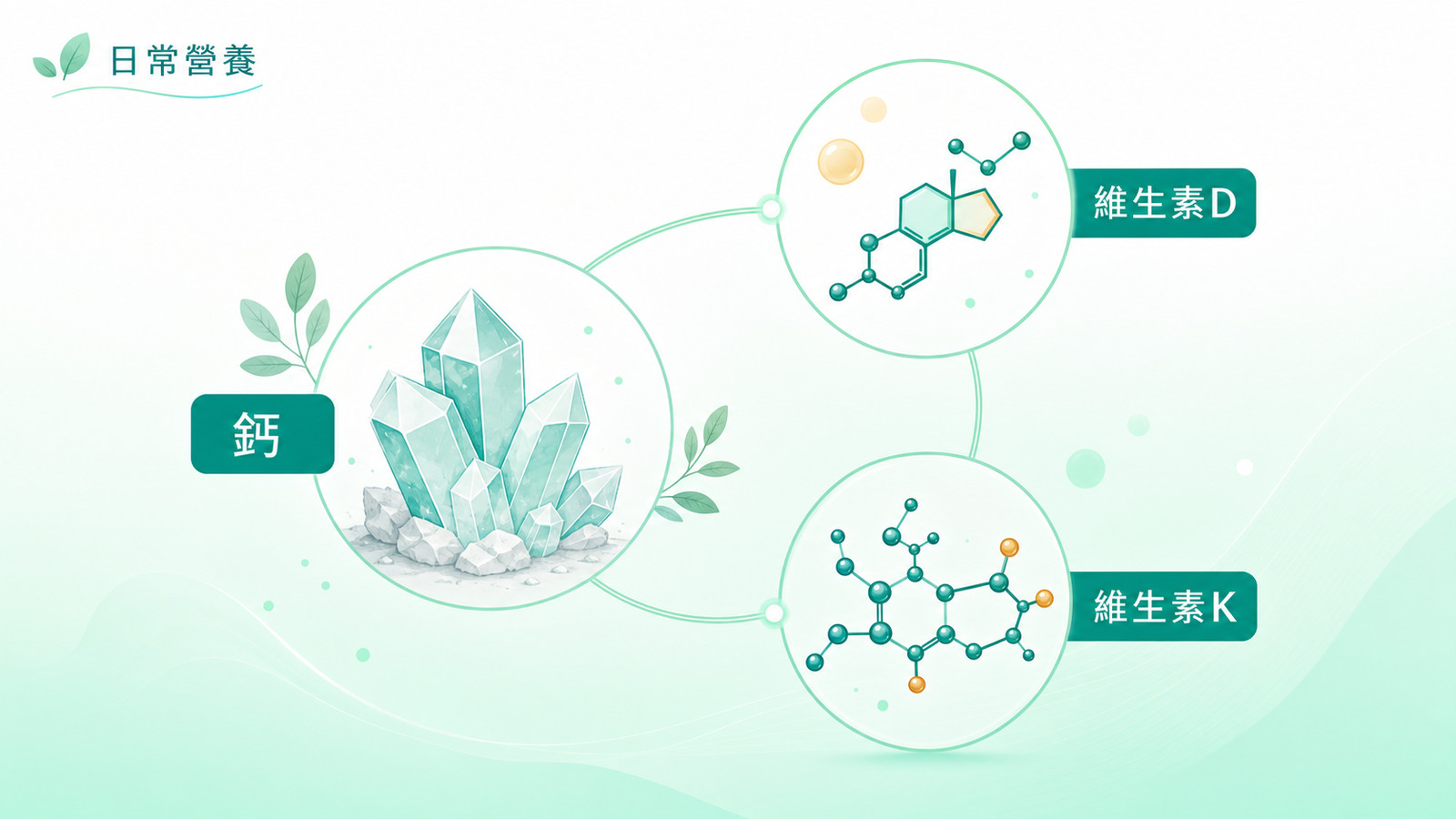
Calcium is one of the components of bone — that is its role in the body. But calcium cannot get through the door on its own; it relies on vitamin D, which helps increase calcium absorption and supports the growth and development of bones and teeth. Once inside, there is a next step: vitamin K promotes the calcification of bone tissue. BLNC's milk calcium is a single formula that comes with vitamin D and K together, placed in the foundation group for the first 15 days, treated as one set rather than three separate purchases. This formula provides vitamin D at 141% and vitamin K at 94% of the daily reference value, so both helpers are there in full. So whether calcium supplementation is useful depends less on how many tablets you swallow than on whether this supporting pair is in place.
▸ What are D and K each doing? The division of labour between the two
Vitamin D helps increase calcium absorption and supports the growth and development of bones and teeth — it is the first leg of this combination. Vitamin K2 takes a different route: it promotes the calcification of bone tissue, helping the body place calcium where it belongs. This division of labour is why calcium, D and K are usually treated as one combination rather than three separate items (Schwalfenberg, 2017). BLNC's milk calcium puts that combination into a single formula: 90.2 mg of calcium, together with vitamin D at 141% and vitamin K at 94% of the daily reference value. Calcium in an everyday diet is already spread across several meals — dairy, soy products, dark green vegetables — so what this formula supplies is the pairing: with D and K given in full, the combination holds together, and you do not have to remember to assemble it yourself.
Some older adults find their calves tight and hard to relax at night. Magnesium works behind the scenes in several hundred reactions in the body; it contributes to the normal function of the heart, muscles and nerves, and to normal energy metabolism. Yet older adults who eat less and have a smaller appetite often do not get enough of it. BLNC's marine magnesium single formula provides magnesium at 51.9% of the reference value per day, also placed in the foundation group for the first 15 days. It connects back to the earlier thread: magnesium is involved in the steps that convert vitamin D into its active form, so when magnesium is short, the vitamin D you take is harder to put to use. When the topic is absorption, magnesium is the link most easily overlooked.
▸ How are magnesium and vitamin D connected? The enzyme-level relationship
Magnesium participates in several hundred enzymatic reactions in the body (de Baaij et al., 2015), including several of the steps that convert vitamin D into its active form. This means magnesium status feeds back into how efficiently vitamin D is used — in other words, getting magnesium steady is what lets the earlier calcium-and-vitamin-D thread run smoothly. The marine magnesium single formula reaches 51.9% of the daily reference value for magnesium; magnesium contributes to the normal development of bones and teeth and helps maintain normal carbohydrate metabolism. When food intake shrinks in later life, magnesium is often the first to fall, and this formula brings it back to an adequate level.
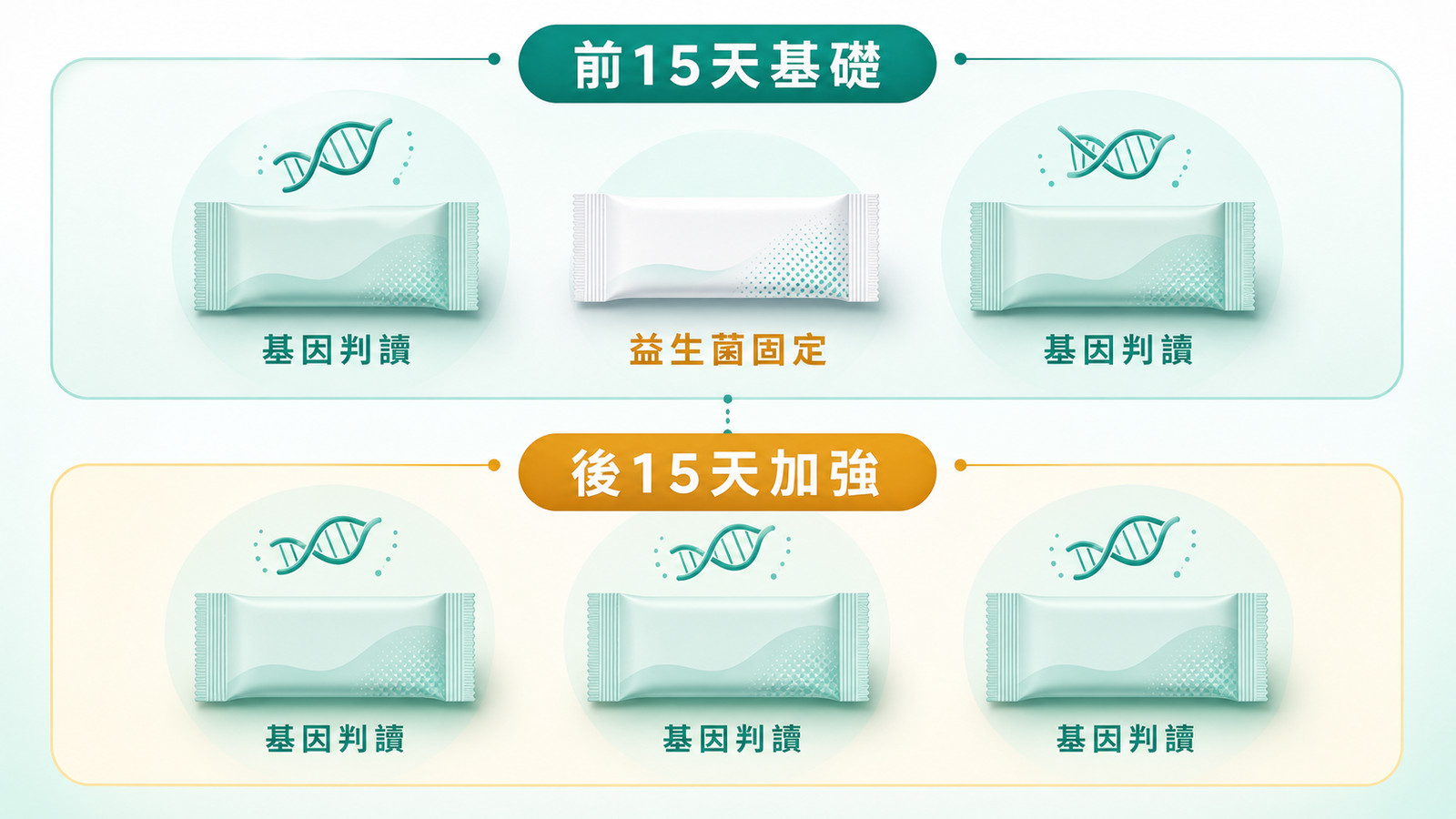
Each month BLNC gives you six, not all eleven. Everyone gets the probiotic; the other five are chosen from the remaining formulas based on your genes. If the genetic reading leans towards the mineral absorption thread, the first 15 days will have the probiotic as a base, with the mineral place going to either milk calcium with vitamin D and K or marine magnesium — one of the two, never both in the same month — to steady the daily nutrition baseline first. The second 15 days then draw from the enhancement group — formulas such as UC-II collagen or ergothioneine — taking your daily nutrition one step further in the direction you need. Base first, then depth: only a few items a day, split into two stages, which makes it easier to keep up over the long run. What changes is which five, not how many.
▸ Want the difference between 11 and 6? How the pool and the monthly set are split
Eleven is the fixed product pool — five foundation candidates for the first 15 days and six enhancement candidates for the second 15 days. It is the menu, not what you take each month. The six that reach you are split like this: three in the first 15 days, the probiotic plus one vitamin item and one mineral item; three in the second 15 days, two enhancement items plus one Omega-3 lipid. Each place takes one item from its own group — the mineral place goes to either milk calcium with vitamin D and K or marine magnesium, and the same either-or applies to the vitamin place and to the lipid place (algal oil DHA or the astaxanthin single formula). Which one it is follows your own genetic reading.
▶ Curious what a genetic nutrition report looks like? A cheek swab takes a few dozen seconds, no blood draw, and serves as a reference for reading your genetic nutrition tendencies and which foundation formulas may come first.
The earlier sections covered calcium needing vitamin D and K as helpers; there is one more layer, and it sits in your genes. Even with the same combination in place, the switch that "signs for" vitamin D in the body differs in sensitivity from person to person. That affects how efficiently you use calcium and vitamin D, so the same supplement naturally produces different responses (for a closer look at genetic differences in vitamin D, see genes and vitamin D absorption).
BLNC's formula recommendations rest on a two-layer reading: the first layer covers 22 nutrients, which you will see in the report; the second layer brings a broader set of genetic tendencies into the combined reading to select the six that suit you best. That second layer is the innate nutritional tendency a questionnaire has trouble capturing and testing is needed to fill in, which is what makes the formulas fit you more closely.
BLNC comes from "Insight Genomics", a technology transfer team out of National Cheng Kung University. The research team has focused on genetic nutrition interpretation for years, and everything from sample to analysis is handled in our own laboratory, so that what you take is clearer and easier to trust.
▸ Which gene is that "signing switch"? VDR and how efficiently you use it
The gene that signs for vitamin D is VDR, the vitamin D receptor. Individual differences in it affect how efficiently the body uses vitamin D and calcium, which is why the same calcium supplement produces different responses in different people (Uitterlinden et al., 2004). Associations between this class of genes and calcium or vitamin D utilisation come mostly from observational and genetic association studies; they are currently used to understand differences in constitution, and actual supplementation still has to be considered alongside overall nutritional status. This is also why the two-layer reading exists: a single gene is not enough, and the overall nutritional tendency has to be read together.
By this point you may be wondering: "At my age, should I be taking calcium and vitamin D?"
That is not a question you should have to guess at. Let your genetic nutrition tendencies give you a reference direction first.
The formulas you receive each month are not one set handed out by age; they come out of a combined two-layer reading of 22 nutrients and a broader set of genetic tendencies — what matters is your overall genetic nutrition tendency and putting the right formulas into the right stage. The genetic test is done once and used for years, so the sooner the direction is set, the sooner you stop guessing in front of the shelf. The full logic behind genetic precision nutrition is a good place to start if you want the whole picture.
A genetic report is a reference for understanding your own body better, not a medical diagnosis; these formulas are daily nutritional support, not medicines. They help keep the basics of daily care steady and cannot be used to prevent, improve or treat any disease. If you have a health condition, follow your doctor's advice.
Everyone gets the probiotic; the other five are selected by the two-layer genetic reading. Nothing you need is missed, and nothing you do not need is bought.
- Book a cheek swab: a few dozen seconds, no blood draw, and you get a genetic nutrition report of your own.
- Collect your personal formulas: see which foundation and enhancement items your genes would place along the daily nutrition thread for older adults.
For older adults, is taking more calcium tablets enough on its own?
Not quite. Vitamin D helps increase calcium absorption, vitamin K promotes the calcification of bone tissue, and gut absorption naturally slows with age. If your genetic reading leans towards this thread, milk calcium paired with vitamin D and K is a more complete approach than pushing calcium alone.
With a whole row of supplements, how do I tell which ones overlap?
Look at the nutrients, not the product names. Many products carry different names while supplying the same nutrient, and that is usually where duplicate buying happens. BLNC gives six formulas a month precisely to narrow the pool down to the ones you actually need — nothing you need is missed, and nothing you do not need is bought.
Is it always the same six each month, or do they change?
The number stays at six: of the eleven, the probiotic is the one fixed item, and the other five are selected from the remaining ten according to your genetic reading. So the structure of six a month stays stable rather than fluctuating; which five they are follows the recommendation in your report.
I take medication for a chronic condition — can I take these alongside it?
These are daily nutritional supplements rather than medicines, but if you are on medication or have a health condition, it is safer to show the product ingredients to your doctor or pharmacist before deciding.
- Uitterlinden AG, Fang Y, van Meurs JBJ, Pols HAP, van Leeuwen JPTM. Genetics and biology of vitamin D receptor polymorphisms. Gene. 2004. PMID:15315818
- Schwalfenberg GK. Vitamins K1 and K2: The Emerging Group of Vitamins Required for Human Health. Journal of Nutrition and Metabolism. 2017. PMID:28698808
- de Baaij JHF, Hoenderop JGJ, Bindels RJM. Magnesium in man: implications for health and disease. Physiological Reviews. 2015. PMID:25540137


